 English▼



Linea di macchine per la produzione di celle cilindriche automatiche
fabbricazione e attrezzatura del laboratorio della batteria agli ioni di litio 18650
diagramma di flusso delle celle a bottone agli ioni di litio ed elenco delle macchine
fabbricazione e attrezzatura del laboratorio della batteria del sacchetto dello Li-ione
- Posta elettronica : David@tmaxcn.com
- Posta elettronica : Davidtmaxcn@gmail.com
- : No. 39, Xinchang Road, Xinyang, Haicang Dist., Xiamen, Fujian, China (Mainland)
blog
18650 Battery Spot Welding Machine for 18650 & 21700 Packs
Loose joints and burned cell caps directly undermine cylindrical pack yields during volume assembly. Selecting the right 18650 battery spot welding machine determines whether your line achieves consistent electrical conductivity or suffers from costly scrap rates. Small pack assemblers and manufacturing supervisors often struggle to balance automation budgets with weld repeatability. This survey explores operational trade-offs, mechanical configurations, and factory integration benchmarks to help you invest with confidence.
Core Operational Mechanics and Weld Consistency
Resistance spot welding on cylindrical cells demands precise thermal regulation within milliseconds. Excessive energy breaches the thin nickel casing of the cell, while insufficient current leads to cold joints that disconnect during transit. Contemporary systems use closed-loop feedback controls to monitor voltage and current delivery simultaneously. This process prevents sparks and protects internal separators from thermal degradation.
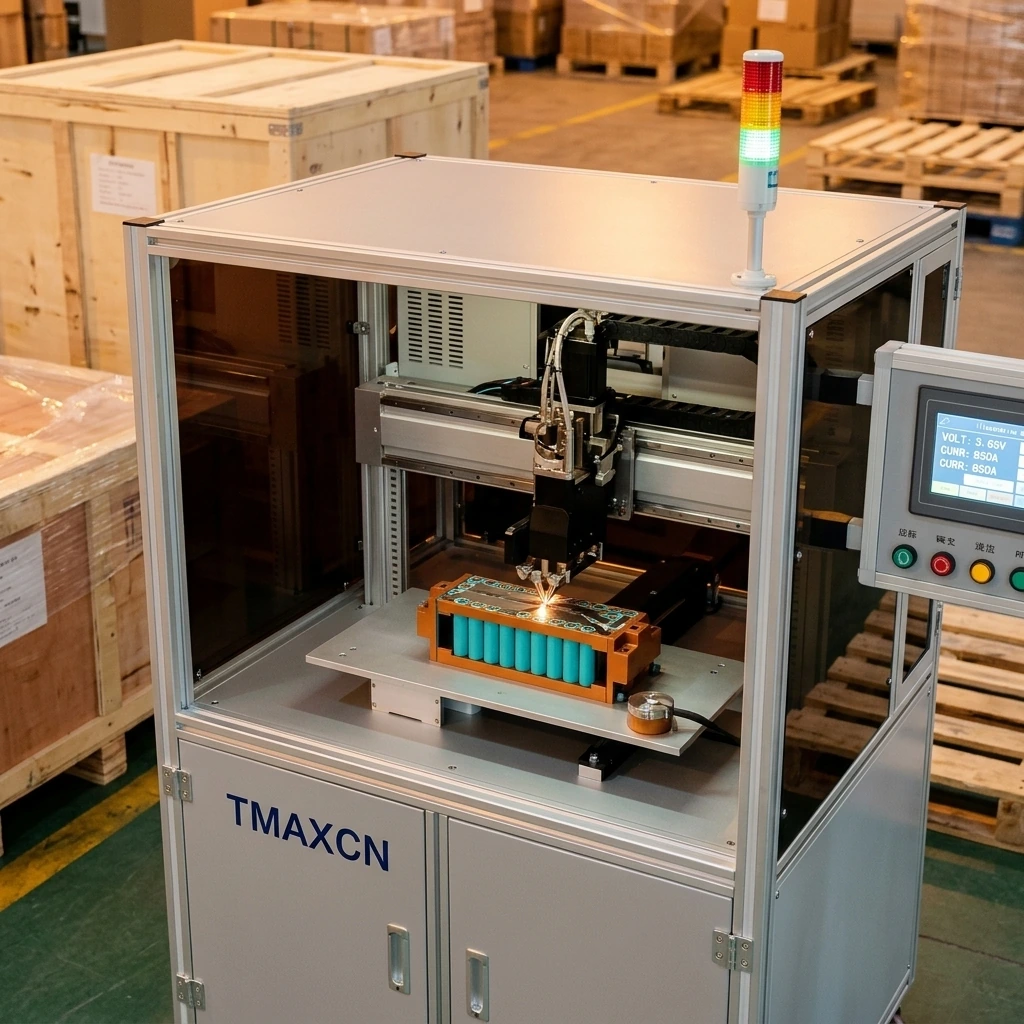
Uniform pressure delivery across every pulse prevents surface burns. Pneumatic weld heads maintain constant contact force against varying nickel sheet profiles. Selecting an adjustable provides the dynamic range needed for thin pure nickel and thicker coated tabs. Production setups benefit immediately from dual-pulse discharge designs, where the first burst cleans the surface and the second fuses the metal securely.
Single Sided vs Double Sided Automation Platforms
Throughput demands dictate the mechanical layout of your pack line. Single-sided automated tables suit modular production runs, allowing operators to change fixtures rapidly between alternating pack formats. They reduce footprint while giving clear visibility over every solder joint. These systems fit medium scale commercial lines handling diverse battery shapes.
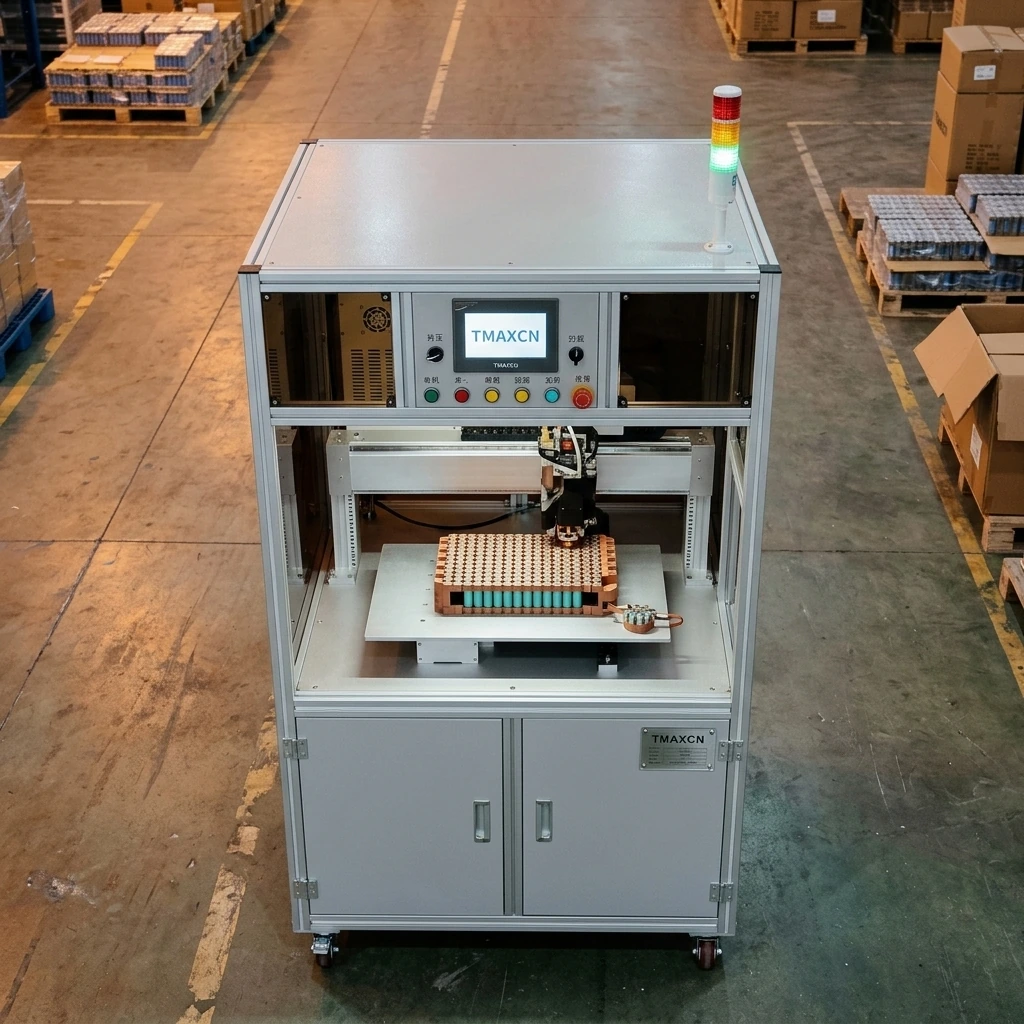
High volume facilities rely on an configured for double-sided operation. Dual gantry heads tackle top and bottom busbars without manual intervention, doubling hourly piece counts. Standardizing your assembly line on rigid motion frames ensures positional accuracy within tight tolerances, keeping placement errors below 0.05 mm across large matrices.
Evaluating Factory Specifications and Build Standards
Hardware longevity depends on robust internal transformers, solid-state switches, and reliable motion drivers. Sourcing managers must verify hardware compliance and safety certifications before issuing purchase orders. Verified CE certification ensures compliance with electrical safety and electromagnetic shielding norms.
| *Evaluation Metric* | *Entry-Level Manual Benchtop* | *Automated Industrial Workstation* |
|---|---|---|
| Daily Throughput | 200 to 500 cells | 3,000 to 8,000 cells |
| Weld Pulse Control | Single-knob analog adjustment | Digital dual-pulse closed loop |
| Current Accuracy | ±5% variance range | ±1% regulated discharge |
| Fixture Flexibility | Manual jig alignment | CNC programmatic gantry |
A complete line evaluation also considers auxiliary equipment needed for full integration. Pairing your welding unit with a matching workflow reduces material misfeeds. Direct shipments originating from specialized industrial hubs like Xiamen simplify freight tracking, spare parts dispatch, and engineering support.
FAQ
Can an 18650 battery spot welding machine safely process pure nickel strips on automated lines?
Yes, high current transistor or inverter models manage pure nickel strips up to 0.2 mm thickness without burning cell terminals. Using pure nickel requires stable welding pressure and clean electrode tips to keep resistance uniform across high-speed cycles.
How does an automatic battery pack welder integrate with existing pack assembly fixtures?
Modern gantries utilize programmable visual alignment and adjustable fixture tables to accept existing cell trays. Technicians import array coordinates via touch screen interfaces, completing changeovers between differing pack matrices in less than fifteen minutes.
What lead time and shipping standards apply to industrial nickel strip welding machine orders?
 +86 13174506016
 David@tmaxcn.com


